
Observers called it one of the biggest expansions ever in the history of Native American sovereignty.
The U.S. Supreme Court in 2020 handed down a historic decision known in shorthand as McGirt, or McGirt v. Oklahoma. A majority of the justices found that state and local law enforcers could not enforce the law against people who were Indian and on Native land.
State and local authorities could no longer arrest and prosecute tribal members in Oklahoma for committing crimes. These responsibilities were instead handed over to the tribes and law enforcers from the federal government.
Then another decision came from the U.S. Supreme Court in 2026 that sought to clarify who was affected by McGirt. While tribal members couldn’t be prosecuted by non-Indian state and local police, Native people must still pay state taxes in Oklahoma regardless of their tribal status.
Were you impacted by the McGirt ruling? If not, maybe you need help from a lawyer in another dispute. If so, call Joe Norwood and Norwood.Law for a consultation at 918-582-6464.
Read about Norwood.Law’s past achievements here.
Recognized
National commentators in the United States have long struggled to figure out how they should describe Oklahoma. Is it the Southwest? Is it the Midwest? Is it the South?
The U.S. Supreme Court says we’re none of these things. The justices in McGirt, led by a conservative, declared that Oklahoma is, in fact, Indian Country. This greatly expanded the sovereignty of native tribes here.
In response, many politicians and police leaders were not happy with the ruling and blasted the court for endangering public safety. Fighting crime can’t happen without state and local law enforcement, they said.
They argued that removing state and local law enforcement is inviting chaos and law-breaking.
Joining
Jimcy McGirt from McGirt v. Oklahoma is a member of the Seminole Nation. He’d been convicted of three sexual offenses, including assaulting his wife’s four-year-old granddaughter.
Although the facts of the case were disturbing, the result shook the ground. The U.S. Supreme Court argued that state and local authorities in Oklahoma could not prosecute McGirt because he was Native American and on an Indian reservation.
The ruling was narrow at 5-4. As a result of the decision, some 1.8 million people were now living on an Indian reservation.
Towns and tribal nations feuded over who had jurisdiction to prosecute traffic violations and other municipal cases.
The conservative Justice Neil Gorsuch of the U.S. Supreme Court had been known to side with the tribes, and he joined four liberal justices in McGirl. Gorsuch authored the decision.
A huge portion
But there were dissenters among the justices in McGirt.
In his dissenting opinion, Chief Justice John Roberts argued that the reservation had already previously been “disestablished.”
Wrote Roberts:
“None of this is warranted. What has gone unquestioned for a century remains true today: A huge portion of Oklahoma is not a Creek Indian reservation. Congress disestablished any reservation in a series of statutes leading up to Oklahoma statehood at the turn of the 19th century. The Court reaches the opposite conclusion only by disregarding the ‘well settled’ approach required by our precedents.”
Shake up
The second case in recent years to shake up tribal sovereignty was called Stroble v. Oklahoma Tax Commission. Alicia Stroble was a resident of Muscogee, Oklahoma, lived on the Muscogee Reservation, and worked for the Muscogee Nation.
Prompted by the McGirt decision, Stroble argued in court that she should also not have to pay Oklahoma taxes. The Oklahoma Supreme Court first ruled against Strobler in 2025 before the case went on to the U.S. Supreme Court.
According to the Oklahoma news site NonDoc, the state supreme court decided against Stroble despite the U.S. Supreme Court’s precedents in another case, McClanahan v. Arizona State Tax Commission, which exempted tribal citizens from paying state taxes.
Wrote the state supreme court in Oklahoma: “[Alicia] Stroble is asking this Court to extend McGirt to civil and regulatory law – to find the State is without jurisdiction to tax the income of a tribal member living and working on the tribe’s reservation. This we cannot do.”
Chaos
In its McGirt decision, the U.S. Supreme Court also concluded that the Muscogee (Creek) Nation as a tribe had never been disestablished by the United States. In other words, the tribe had not given up its sovereignty.
But the business and conservative establishments in Oklahoma didn’t like it anyway and complained that the ruling would prompt major regulatory uncertainty across the state. They feared new regulations from tribal entities in addition to existing state and local government rules.
The more recent Stobler decision said the McGirt ruling does not give civil regulatory authority to the tribes. It just gives them jurisdiction over criminal cases.
The conservative Oklahoma Council on Public Affairs said “extending McGirt beyond criminal law to also include civil regulation would have been extremely disruptive for thousands of Oklahomans and likely created chaos.”
Act now
Joe Norwood and Norwood.Law have the experience and knowledge you need.
Maybe you’re needing legal protection for a small business. Maybe you’re fighting for child custody. Maybe you’re fighting to protect your civil rights.
Norwood.Law practices family, estate, personal injury, civil rights, criminal, business law and more. Let Joe Norwood help you return to the life you had or gain the one you want.
Call for a consultation at 918-582-6464.
Fit to print
Joe Norwood’s successes in both civil and criminal law have been publicized by news organizations nationwide.
So stay here to get smart.
If you need legal help, don’t wait. Call Joe Norwood for a consultation at 918-582-6464.
Reject
When the U.S. Supreme Court handed down its decision in McGirt, there was more the conservative Justice Neil Gorsuch had to say about Native sovereignty:
“The federal government promised the Creek (tribe) a reservation in perpetuity. Over time, Congress has diminished that reservation. It has sometimes restricted and other times expanded the Tribe’s authority. But Congress has never withdrawn the promised reservation.”
“As a result, many of the arguments before us today follow a sadly familiar pattern. Yes, promises were made, but the price of keeping them has become too great, so now we should just cast a blind eye. We reject that thinking. If Congress wishes to withdraw its promises, it must say so. Land reserved for the Creek Nation since the 19th century remains ‘Indian country.’”
Winning it all
Joe Norwood’s record says it all.
He’s won against foreign manufacturers. He’s won against the government over wrongful convictions. He’s won against banking interests and insurance companies.
Hurry and call now to protect the life you have or gain the one you want.
Joseph M. Norwood is a Tulsa attorney with the courtroom expertise you need. Contact his office at 918-582-6464.
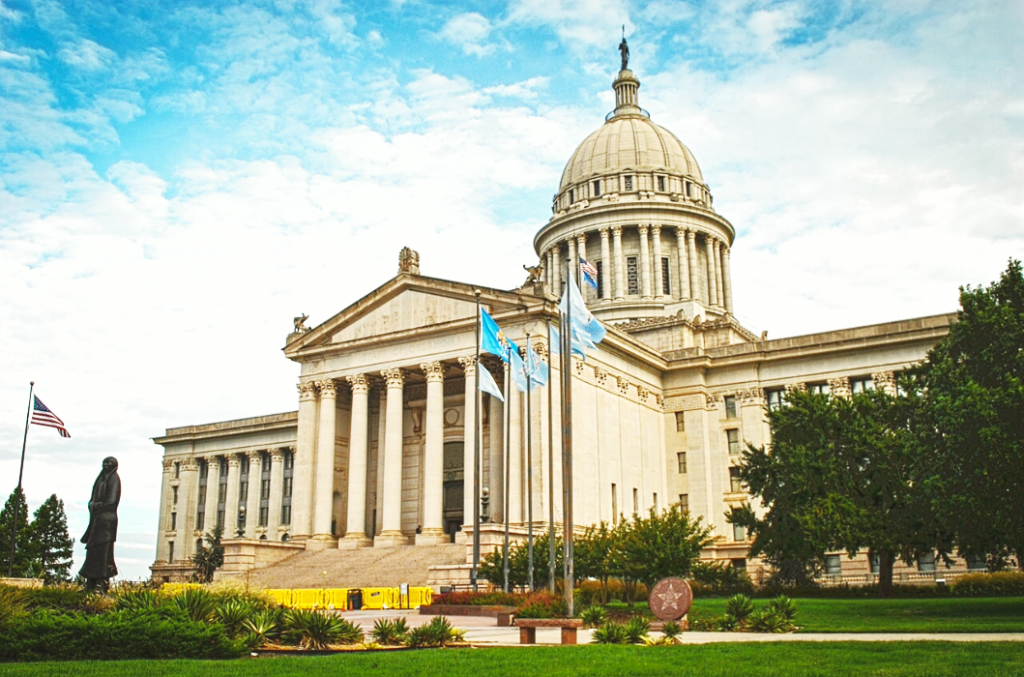
Caption: Oklahoma capitol building
Credit: James Johnson

By G.W. Schulz